From ash to brick
in six steps
One line, one roof, one standard. Every Ishtak brick is weighed, mixed, pressed, cured and tested the same way.
 ILLUSTRATION
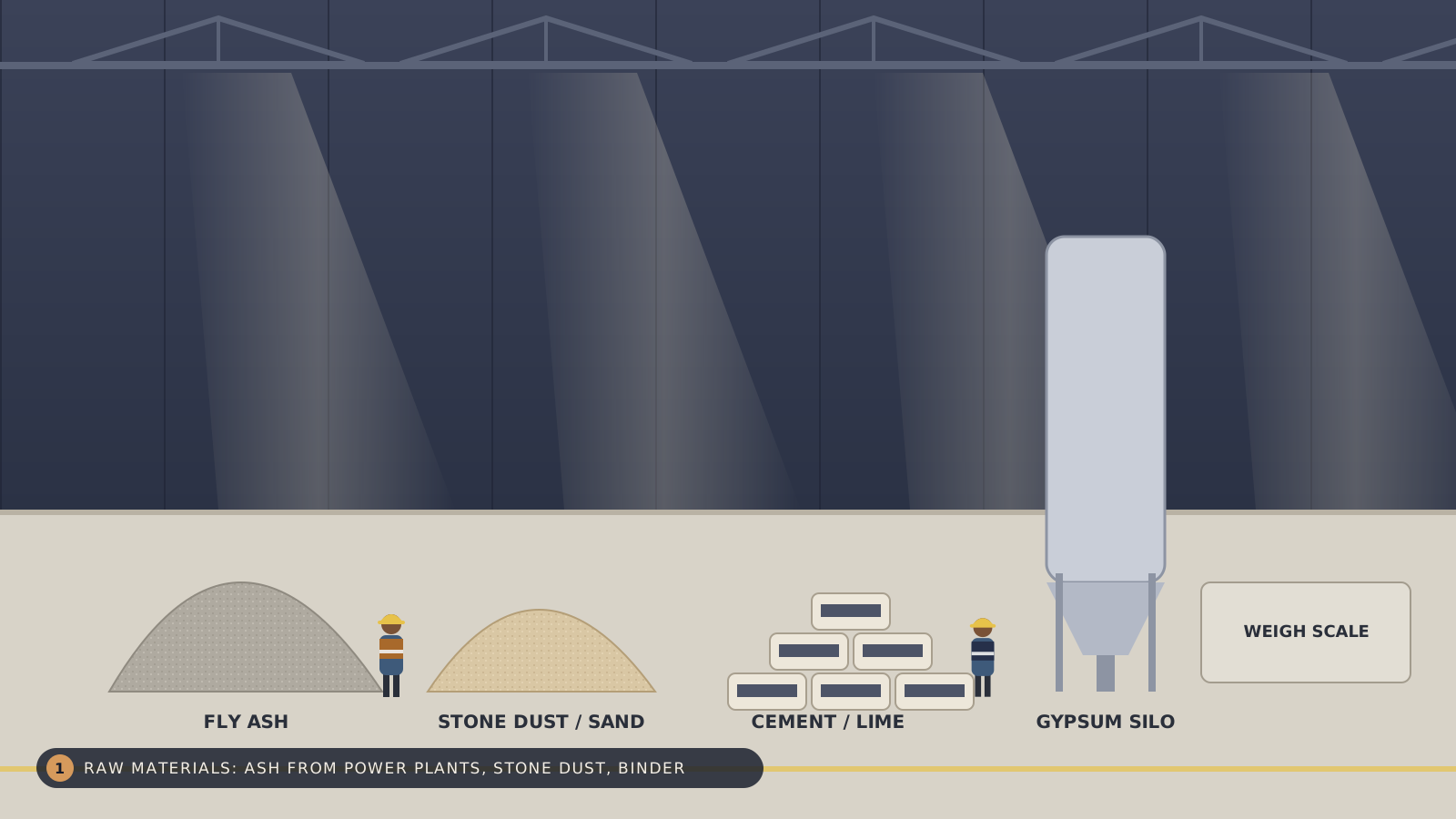
Ash from power plants, not soil from farms
Fly ash is the fine ash left after coal is burnt in thermal power plants. We bring it in from plants in the region and blend it with stone dust or sand and a binder (cement, or lime with gypsum). Every material is weighed for each batch.
- Main material
- Fly ash, the largest share of the mix
- Filler
- Stone dust or sand
- Binder
- Cement, or lime with gypsum
- Not used
- Topsoil, coal or firewood
 ILLUSTRATION
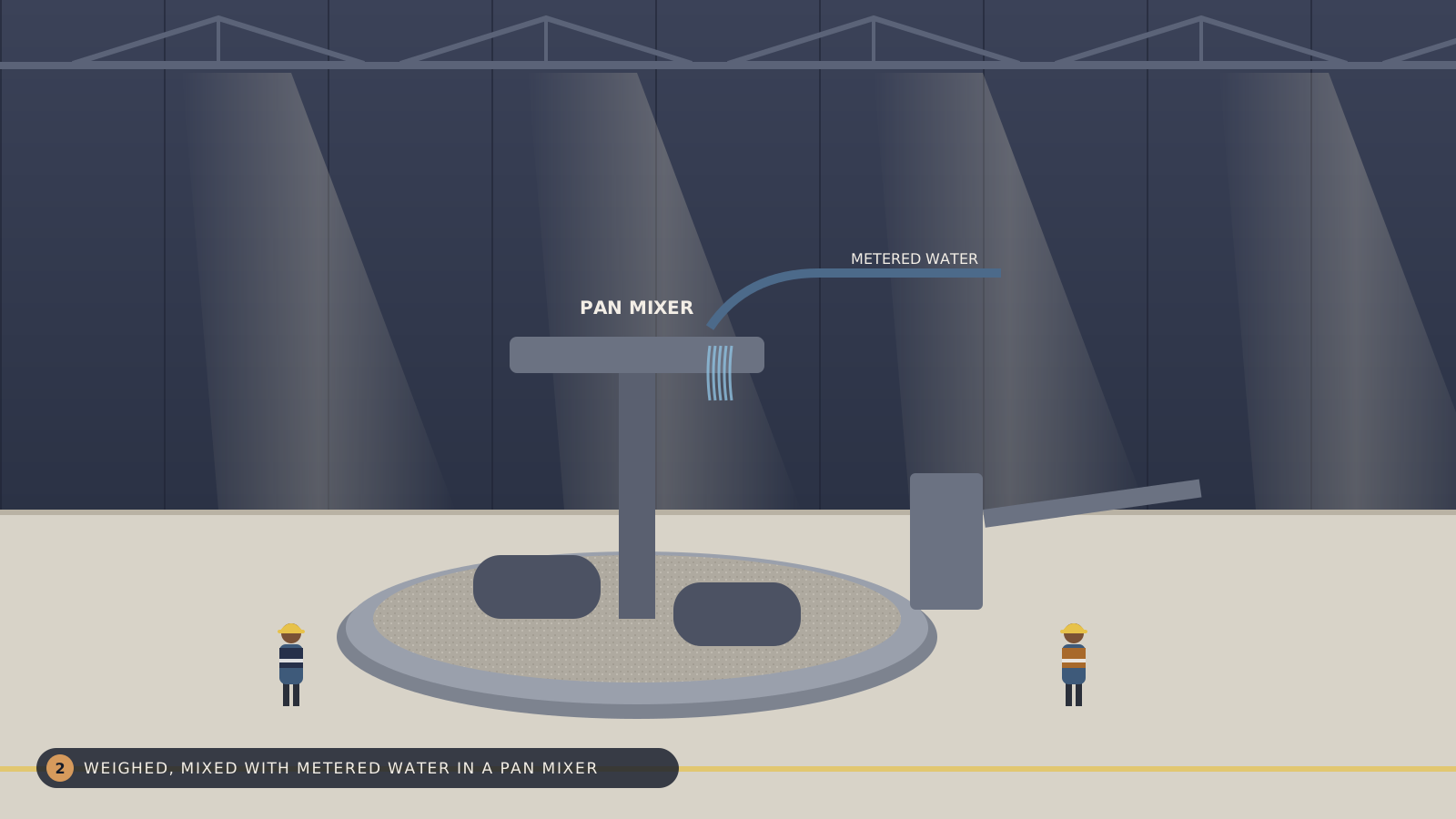
Weighed, then mixed with metered water
The materials go into a pan mixer with a measured quantity of water, so every batch has the same moisture and the same mix. Even mixing is what gives even strength.
- Machine
- Pan mixer
- Control
- Weighed batches, metered water
- Why it matters
- Same mix, same strength, every brick
 ILLUSTRATION
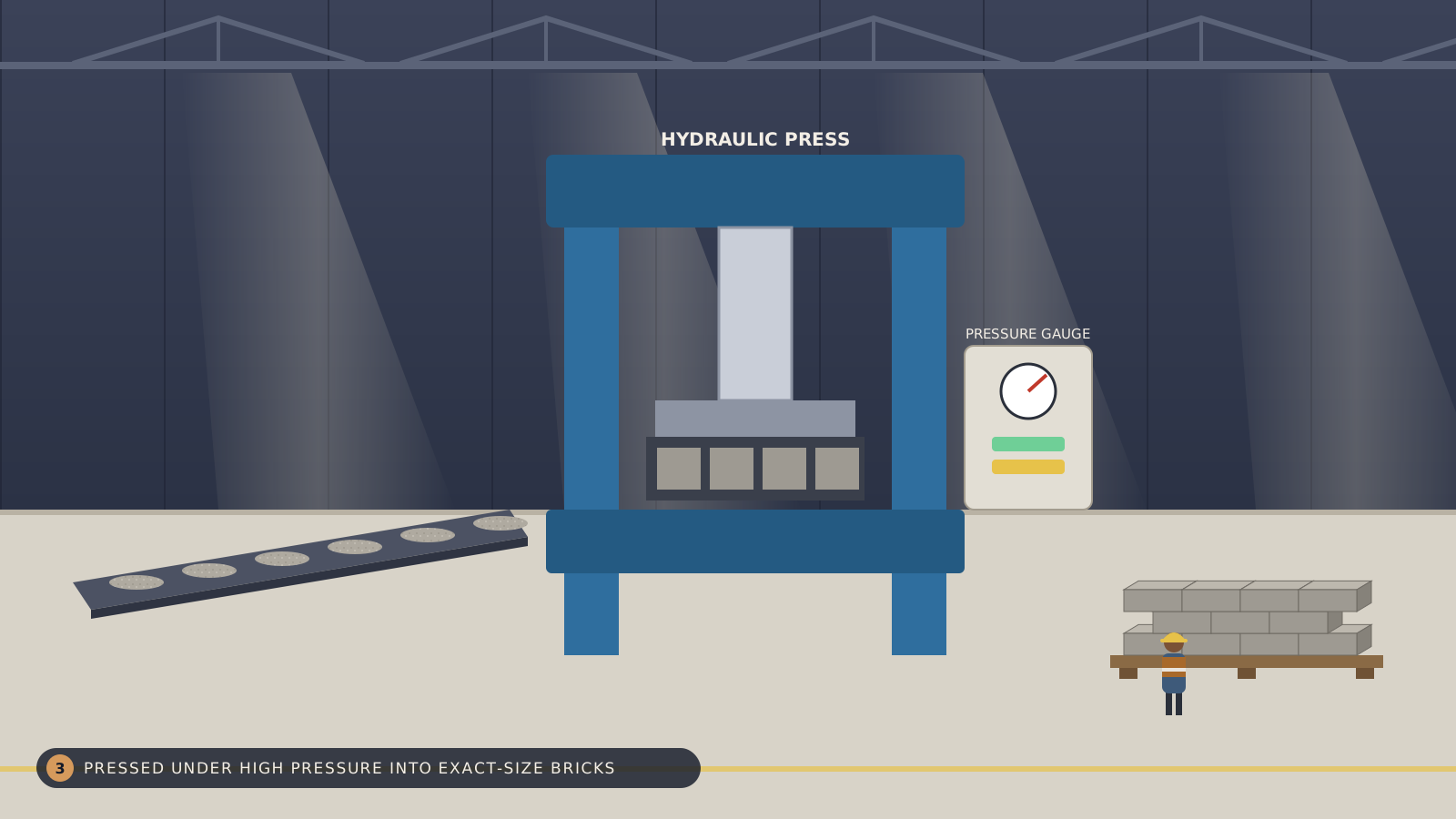
Pressed in a steel mould to an exact size
A conveyor feeds the mix to a hydraulic press, which compacts it under high pressure in a steel mould. Every brick leaves the press the same size, with sharp edges and flat faces.
- Machine
- Hydraulic brick press
- Result
- Uniform size, sharp edges, flat faces
- On site
- Thinner mortar joints, less plaster
 ILLUSTRATION
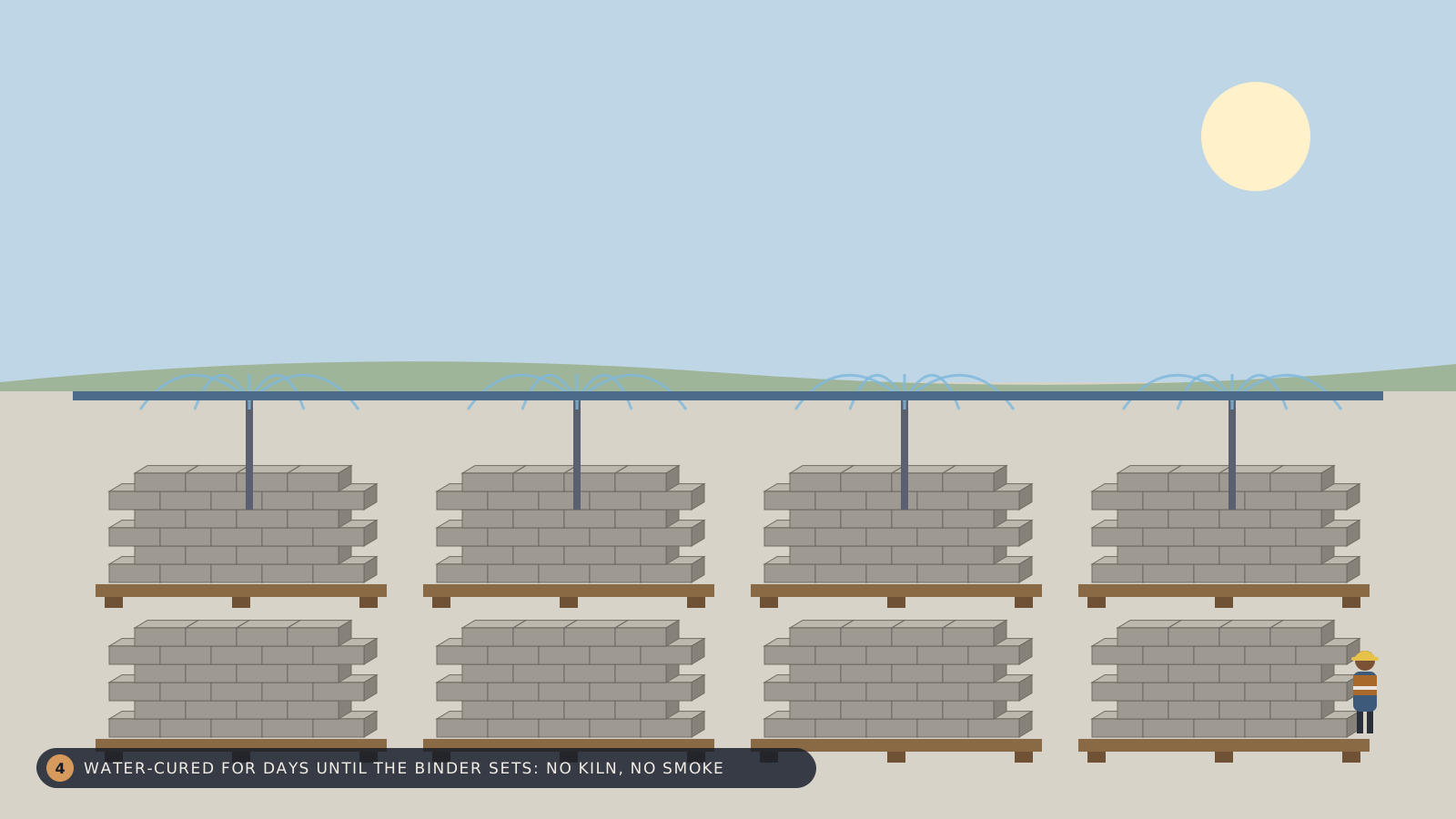
Water-cured, never fired
Fresh bricks rest on pallets and are then kept wet for days while the binder sets and gains strength. There is no kiln: no coal, no smoke, no burnt bricks.
- Method
- Water curing in the yard
- Duration
- Commonly 10 to 14 days (Odisha SPCB guideline)
- Firing
- None
 ILLUSTRATION
Every batch tested before it leaves
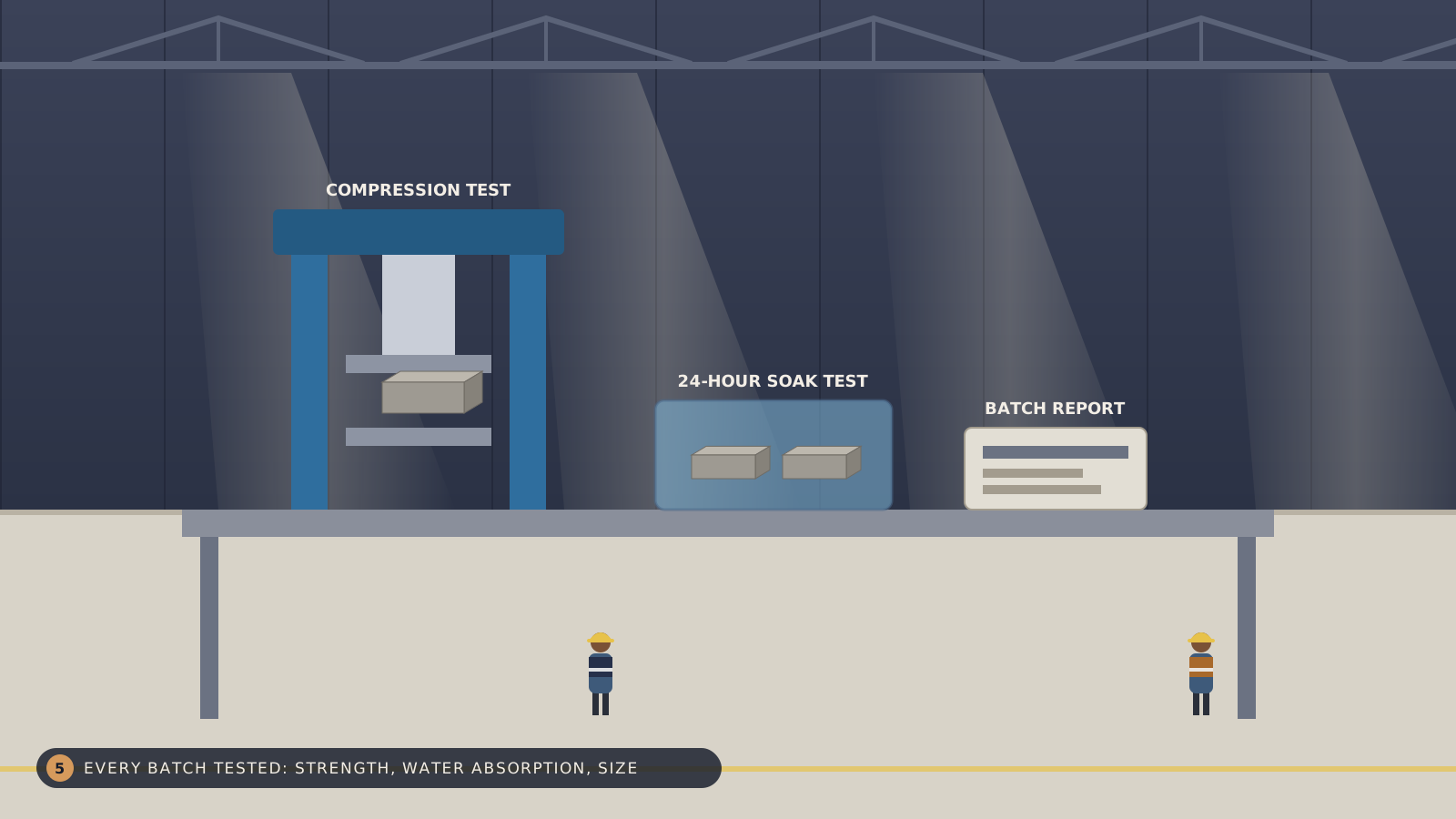
Samples from each batch are tested for compressive strength, water absorption, size and efflorescence, following the methods referred to in IS 12894. Results go on a batch report.
- Strength
- Wet compressive strength test
- Water
- 24-hour soak test
- Paperwork
- Batch report with every delivery
 ILLUSTRATION
Stacked, strapped and delivered
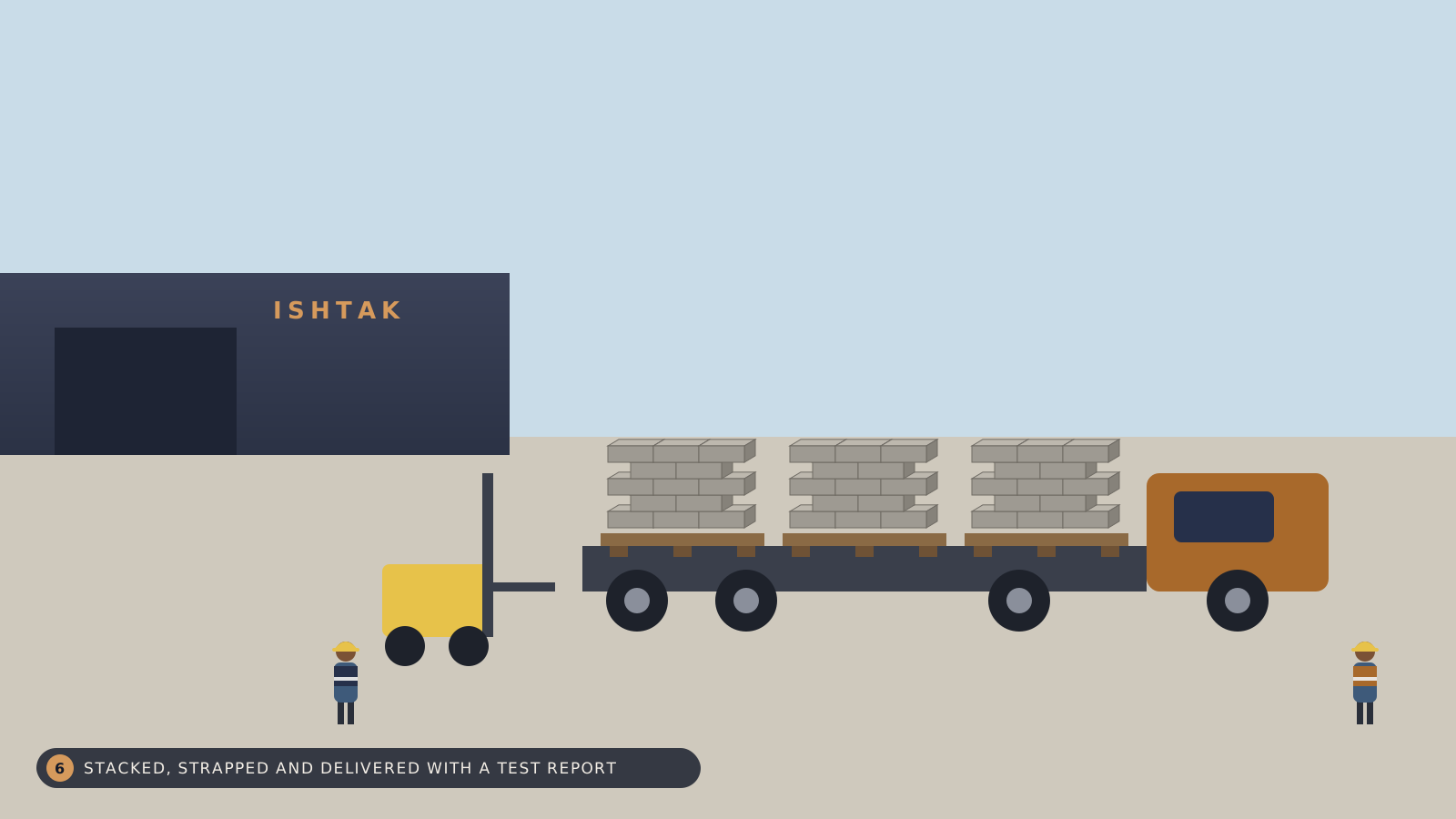
Bricks are stacked on pallets and delivered to your site with the batch report, so your engineer can check what arrived.
- Delivery
- Tricity, Panchkula, Ambala, Derabassi and nearby
- With it
- Batch test report and GST invoice
Process as described in IS 12894:2002 requirements as summarised in the Odisha SPCB fly ash brick guideline and JK Cement fly ash brick guide (typical values). Exact mix and curing are set by our quality engineer and recorded per batch. Factory images are illustrations.
Want to see it in person?
Visits to our Barwala works can be arranged once production starts.